
 |
| Courtesy: Libreria Editrice Vaticana |
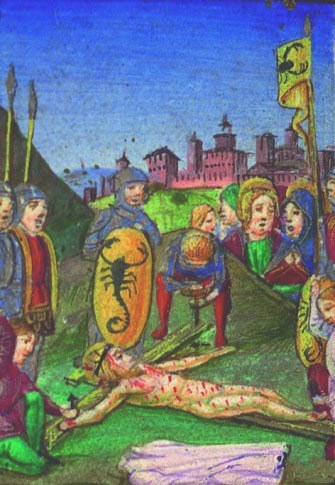
The prophet Isaiah in the Old Testament wrote one of several prophecies about Jesus being crucified. Isaiah 52:13-15 says:
"See, my servant will act wisely; he will be raised and lifted up and highly exalted. Just as there were many who were appalled at him — his appearance was so disfigured beyond that of any man and his form marred beyond human likeness — so will he sprinkle many nations, and kings will shut their mouths because of him. For what they were not told, they will see, and what they have not heard, they will understand."
Jesus had suffered much up to this point, with his arrest, a mockery of a trial and conviction, and the severe cruelty of being flogged by the Romans. He then, in his weakened and beaten state, had been forced to walk and carry a 110-pound cross (until He could go no further and the cross was passed on to Simon of Cyrene, who had been standing in the crowd) to Golgotha.
At Golgotha, the pain was just beginning. Crucifixion, as practiced by the Romans, was a method of execution designed for maximum pain and suffering, and had been reserved for the lowest types of criminals, according to David Terasaka at BlueLetterBible.org. First, nails of at least seven inches long were driven into the small bones of the wrists, the better to support the weight. The feet also then were nailed to the cross, Terasaka said.
Then the crucified person was left to hang until he died. Terasaka said that as a person who had been crucified hung there, it became very hard to breathe because of his arms being outstretched. The muscles would also start undergoing severe cramping due to a loss of blood and oxygen.
So it was a painful way to die. Psalm 22:14-15 prophesied of the suffering Jesus would go through:
"I am poured out like water, and all my bones are out of joint. My heart has turned to wax; it has melted away within me. My strength is dried up like a potsherd, and my tongue sticks to the roof of my mouth; you lay me in the dust of death."
But the kicker in all this is Jesus' reaction. Yes, He is suffering immensely, first from the flogging and the march to Golgotha, and then dealing with being crucified itself. But He said this:
"Father, forgive them, for they do not know what they are doing." (Luke 23:34 (NIV))
Jesus knew that the people doing this to Him did not believe who He was. He knew that they had believed that He was God, they would have never done that. At the same time, though, he remained compassionate and loving toward even those who were killing Him.
In the celebration of the Stations of the Cross by Pope John Paul II in 1991, the minister prayed this prayer:
"Lord, grant us merciful hearts that we may bring your reconciliation and forgiveness to all."
Through it all, God still had the gift of mercy for His people (see John 3:16-17). Jesus wanted people to believe and repent, and return to the God who had created them and still loved them.
God still loves people today, and He wants to believe in His Son, Jesus Christ, and repent of their sins. Romans 10:9-10 says all we have to do is this:
"That if you confess with your mouth, "Jesus is Lord," and believe in your heart that God raised him from the dead, you will be saved. For it is with your heart that you believe and are justified, and it is with your mouth that you confess and are saved."
It is a matter of giving up the battle to do it all on our own. It's not a crutch, but it is the means of salvation and peace that only God can provide.
(Editor's note: This is part of a series of the Stations of the Cross.)


