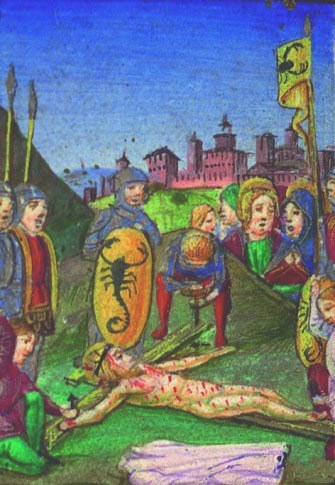
"When Jesus saw their faith, he said to the paralytic, 'Son, your sins are forgiven.' Now some teachers of the law were sitting there, thinking to themselves, 'Why does this fellow talk like that? He’s blaspheming! Who can forgive sins but God alone?' - Mark 2:5-7 (NIV)
Jesus of Nazareth by all accounts was an extraordinary man.
During only three years of public ministry, he turned the world on its head and changed the course of history. He healed the sick, gave speech to the mute and sight to the blind. He rocked the religious foundation of the day to its core, enough where they gave him over to the authorities of the day, the Romans, to be mocked and publicly executed, though that was not enough to stop him either.
One thing that Jesus did while on earth, and continues to do now, is heal sin. By virtue of being God in the flesh (see John 10:30), he could forgive the sins of people for good, with true, eternal effect. He made and continues to make that gift available to anyone who believes in him and confesses their sins (see Romans 10:9-10).
In this video, Pastor Mark Driscoll of Mars Hill Church in Seattle, in his Easter sermon in April 2011 at Seattle's Qwest Field, talks about Jesus being able to heal sin.
Showing posts with label romans. Show all posts
Thursday, May 17, 2012
The healing power of Jesus
Labels:
crucifixion,
easter,
healing,
Jesus,
John,
Mark,
mars hill church,
nazareth,
qwest field,
resurrection,
romans,
seattle,
sermon,
sin
Wednesday, May 16, 2012
Which way to heaven?
"Once more Jesus said to them, 'I am going away, and you will look for me, and you will die in your sin. Where I go, you cannot come.'" - John 8:21 (NIV)
A popular bumper sticker in some cities calls for us to "coexist." The letters are made up of the symbols of various faiths, such as an Islamic crescent moon making up the "C," a Star of David as the "X," and a Christian cross at the "T." It reflects an attitude that no matter what you believe, no matter what your faith is, you will go to heaven when you die if your good deeds outweigh your bad.
However, sadly, that is bad theology. For starters, many faiths such as Christianity and Islam are exclusive beliefs, as in according to their teachings, their way is the only way to heaven. According to them, all other faiths are not the way of God or whatever higher being there is and will not help you in getting to heaven when you die.
So if each faith says they are the way, which way is THE way?
The Bible teaches that only faith in Jesus Christ is sufficient in any of us getting to heaven. Jesus himself is quoted in John 14:6 as saying,
"I am the way and the truth and the life. No one comes to the Father except through me." (NIV)
Jesus is quoted in Matthew as saying,
"Enter through the narrow gate. For wide is the gate and broad is the road that leads to destruction, and many enter through it. But small is the gate and narrow the road that leads to life, and only a few find it." - Matthew 7:13-14 (NIV)
Romans 10:9 tells us,
"That if you confess with your mouth, 'Jesus is Lord,' and believe in your heart that God raised him from the dead, you will be saved." (NIV)
But why do we need a savior? Won't our good deeds, if they outweigh our bad ones, be enough to get us into heaven?
Unfortunately, sadly, no, they are not enough. Romans 3:23 says that "all have sinned and fall short of the glory of God." And even if we tried to be good, it still isn't enough:
"All of us have become like one who is unclean, and all our righteous acts are like filthy rags; we all shrivel up like a leaf, and like the wind our sins sweep us away." - Isaiah 64:6 (NIV)
Jesus also had this to say about calling on God to let us into heaven, even if you go to church on a regular basis:
"Not everyone who says to me, 'Lord, Lord,' will enter the kingdom of heaven, but only he who does the will of my Father who is in heaven. Many will say to me on that day, 'Lord, Lord, did we not prophesy in your name, and in your name drive out demons and perform many miracles?' Then I will tell them plainly, 'I never knew you. Away from me, you evildoers!'" - Matthew 7:21-23 (NIV)
So how do we get to heaven then? One of the most famous verses in the Bible, John 3:16, says, "For God so loved the world that he gave his one and only Son, that whoever believes in him shall not perish but have eternal life." Eternal life means spending eternity with God in heaven. Death, in the eternal sense, means spending eternity apart from God, wallowing in our sins.
That is why Jesus is different.
"But he continued, 'You are from below; I am from above. You are of this world; I am not of this world. I told you that you would die in your sins; if you do not believe that I am the one I claim to be, you will indeed die in your sins.'" - John 8:23-24 (NIV)
Romans 10:9-10 says that if we confess with our mouth that Jesus is Lord and believe in our heart that God raised him from the dead, we will be saved. It's as simple as that.
Want to know more? Feel free to contact us today.
A popular bumper sticker in some cities calls for us to "coexist." The letters are made up of the symbols of various faiths, such as an Islamic crescent moon making up the "C," a Star of David as the "X," and a Christian cross at the "T." It reflects an attitude that no matter what you believe, no matter what your faith is, you will go to heaven when you die if your good deeds outweigh your bad.
However, sadly, that is bad theology. For starters, many faiths such as Christianity and Islam are exclusive beliefs, as in according to their teachings, their way is the only way to heaven. According to them, all other faiths are not the way of God or whatever higher being there is and will not help you in getting to heaven when you die.
So if each faith says they are the way, which way is THE way?
The Bible teaches that only faith in Jesus Christ is sufficient in any of us getting to heaven. Jesus himself is quoted in John 14:6 as saying,
"I am the way and the truth and the life. No one comes to the Father except through me." (NIV)
Jesus is quoted in Matthew as saying,
"Enter through the narrow gate. For wide is the gate and broad is the road that leads to destruction, and many enter through it. But small is the gate and narrow the road that leads to life, and only a few find it." - Matthew 7:13-14 (NIV)
Romans 10:9 tells us,
"That if you confess with your mouth, 'Jesus is Lord,' and believe in your heart that God raised him from the dead, you will be saved." (NIV)
But why do we need a savior? Won't our good deeds, if they outweigh our bad ones, be enough to get us into heaven?
Unfortunately, sadly, no, they are not enough. Romans 3:23 says that "all have sinned and fall short of the glory of God." And even if we tried to be good, it still isn't enough:
"All of us have become like one who is unclean, and all our righteous acts are like filthy rags; we all shrivel up like a leaf, and like the wind our sins sweep us away." - Isaiah 64:6 (NIV)
Jesus also had this to say about calling on God to let us into heaven, even if you go to church on a regular basis:
"Not everyone who says to me, 'Lord, Lord,' will enter the kingdom of heaven, but only he who does the will of my Father who is in heaven. Many will say to me on that day, 'Lord, Lord, did we not prophesy in your name, and in your name drive out demons and perform many miracles?' Then I will tell them plainly, 'I never knew you. Away from me, you evildoers!'" - Matthew 7:21-23 (NIV)
So how do we get to heaven then? One of the most famous verses in the Bible, John 3:16, says, "For God so loved the world that he gave his one and only Son, that whoever believes in him shall not perish but have eternal life." Eternal life means spending eternity with God in heaven. Death, in the eternal sense, means spending eternity apart from God, wallowing in our sins.
That is why Jesus is different.
"But he continued, 'You are from below; I am from above. You are of this world; I am not of this world. I told you that you would die in your sins; if you do not believe that I am the one I claim to be, you will indeed die in your sins.'" - John 8:23-24 (NIV)
Romans 10:9-10 says that if we confess with our mouth that Jesus is Lord and believe in our heart that God raised him from the dead, we will be saved. It's as simple as that.
Want to know more? Feel free to contact us today.
Tuesday, May 15, 2012
What are you following?
![]() |
| Source: HBS Financial Planning |
The world today can pull us in a million different directions. Our jobs can keep us occupied at all hours of the day and night, pulling us away from our families and other important things in our lives. A hobby can take up all of our time. Public opinion can also do the same with the masses, or "everybody else," believing one thing and making it so attractive or so compelling that we feel we must follow or suffer the consequences.
Little has changed since ancient times in that regard.
As documented in the book of 1 Samuel, the ancient Israelites demanded a king to rule over them. At the time, they had been ruled by judges who had learned the will of God for the nation and then led the people in that direction. This was unlike the nations surrounding them, each of whom had kings who ruled with varying degrees of strictness, all as absolute rulers.
Rather than be the separate people that God had called them to be, the Israelites clamored for a king of their own. The prophet Samuel, who had been overseeing the nation as judge, warned them, with words from the Lord, of what a king would do to them:
"This is what the king who will reign over you will do: He will take your sons and make them serve with his chariots and horses, and they will run in front of his chariots. Some he will assign to be commanders of thousands and commanders of fifties, and others to plow his ground and reap his harvest, and still others to make weapons of war and equipment for his chariots. He will take your daughters to be perfumers and cooks and bakers. He will take the best of your fields and vineyards and olive groves and give them to his attendants. He will take a tenth of your grain and of your vintage and give it to his officials and attendants. Your menservants and maidservants and the best of your cattle and donkeys he will take for his own use. He will take a tenth of your flocks, and you yourselves will become his slaves. When that day comes, you will cry out for relief from the king you have chosen, and the Lord will not answer you in that day. " - 1 Samuel 8:11-18 (NIV)
Despite this warning, the people ignored him, saying, "We want a king over us. Then we will be like all the other nations, with a king to lead us and to go out before us and fight our battles." (1 Samuel 8:19-20 (NIV)) So God gave them what they wanted, having Samuel anoint Saul, who was considered an "an impressive young man without equal among the Israelites" (1 Samuel 9:2), as king.
The arrangement worked for a while, with Saul scoring impressive victories early in his reign. However, it soon began to unravel. Following a victory, Saul offered up the burnt offering to God rather than waiting for Samuel and the priests as he had been instructed by God (see 1 Samuel 13:1-15), and he was soon replaced by David, who had risen to prominence after defeating Goliath (1 Samuel 17) and scoring other military victories.
However, with few exceptions, having a king rule over them "like all the other nations" did not work well for Israel. The Bible, in talking about future kings, often described them as having done "evil in the eyes of the Lord," causing the rest of the nation to sin as well. The nation of Israel was split into two kingdoms, Israel and Judah, and eventually both were conquered by foreign powers as the people fell further away from the will of God. Psalm 106 explained the situation:
"They did not destroy the peoples as the Lord had commanded them, but they mingled with the nations and adopted their customs. They worshiped their idols, which became a snare to them. They sacrificed their sons and their daughters to demons. They shed innocent blood, the blood of their sons and daughters, whom they sacrificed to the idols of Canaan, and the land was desecrated by their blood. They defiled themselves by what they did; by their deeds they prostituted themselves. Therefore the Lord was angry with his people and abhorred his inheritance. He handed them over to the nations, and their foes ruled over them. Their enemies oppressed them and subjected them to their power. Many times he delivered them, but they were bent on rebellion and they wasted away in their sin." - Psalm 106:32-43 (NIV)
But where do you go if the world's ways are not a good way to go? The Apostle Paul wrote on this several times in his letters to various churches:
"Do not conform any longer to the pattern of this world, but be transformed by the renewing of your mind. Then you will be able to test and approve what God’s will is —his good, pleasing and perfect will." - Romans 12:2 (NIV)
"See to it that no one takes you captive through hollow and deceptive philosophy, which depends on human tradition and the basic principles of this world rather than on Christ." - Colossians 2:8 (NIV)
Jesus also provided the answers, offering eternal life. He is quoted in John as saying he is "bread of life," and that those who come to him and believe will never go hungry or never go thirsty. (see John 6:35). He was provided as the answer to sin and deceptive philosophies (see John 3:16-17). After a while, his apostles also saw this, even as people were deserting him, with the Apostle Peter saying Jesus has "the words of eternal life."
All it takes is to believe in that.
Monday, May 14, 2012
Today in Missions: Reaching out to Muslims
![]() |
| Source: Remnant Westside Missions |
In many parts of the world, at least by the world's standards, it is inadvisable to talk about Jesus Christ because of the possibly violent reaction it could get from those who are hearing it. However, the possibility of a bad reaction to the Good News has not stopped believers from going out to dangerous parts of the world and preaching the message of reconciliation to those who may not want to hear it.
Today we speak with "Josie," a young woman from Iowa who is working among the Arab Muslim population in the Detroit area. We have changed her name to protect her anonymity as she aspires to soon go to the Middle East, where speaking out as a Christian, and particularly as a Christian woman, can be dangerous work.
Disciple Beacon: Tell the story of how you came to Christ.
Josie: I grew up thinking that being a Christian meant conforming to the rules made by men who led our community and being a good person who loves God. As a young kid, I had this attraction to God and knew that I wanted to be pleasing to Him. I pursued my only way of knowing how to do this by being as good of a person as I could be. I wasn’t too sure about wanting to follow all of the rules though, and I lived in fear of God’s rejection. I thought He must know that I’m holding back from giving Him my life.
When I was 11, I heard that my sister (who was 3.5 years older than me) decided to follow Jesus. That night she came up to me and told me she was sorry for the way she had treated me and asked me to forgive her. I was so touched by her sincerity and saw that something was different with her. Her heart had been changed. I kept watching her as she helped open my eyes to what it meant to follow Jesus. I was confused that she didn’t worry about following the rules I thought were so important, but I was attracted to the way she treated me like a friend and spent time reading God’s Word. I began attending a Bible study that she was a part of and it was there that I began to realize that it wasn’t because of anything that I had done or could do that I would save me from this rejection I feared, but by God’s grace shown through Christ Jesus I would be accepted. It was in this time that I told Jesus, “I’m opening the door for you to come in.” I don’t even think I really understood what I meant, but I know it began a new chapter for our relationship.
Disciple Beacon: What was your spiritual journey like afterward?
Josie: Every day since then and every day now, God is continuously opening my eyes to His love that surpasses understanding. Truthfully, I continued to struggle in my heart with whether God really accepted me or not. Every time I encountered a different requirement for salvation, I felt the doubt come back. What got me through was clinging onto the promise that “we have confidence to enter the holy places by the blood of Jesus…[so] let us draw near with a true heart in full assurance of faith, with our hearts sprinkled clean from an evil conscience and our bodies washed with pure water. Let us hold fast the confession of our hope without wavering, for he who promised is faithful.” (Hebrews 10:19,22-23).
It wasn’t until recently that Jesus gave me healing from the lies of legalism by allowing me to experience the same forgiveness that He gave to the woman caught in adultery as well as freedom from the accusations around me as I saw the Pharisees drop their stones and heard Him say to me, “Neither do I condemn you” (John 8:2-11). It’s in this freedom that I can follow Him and share the good news of the healing for all our wounds.
Disciple Beacon: What led to you becoming a missionary? Was it a single event?
Josie: Well, if this means sharing the good news of Jesus to those who don’t know it, then that happened at the same time of experiencing it for myself. I was all about letting my friends know that they could come to Jesus just as they were and there was no reason to wait to accept His salvation as I wanted them to know this same hope.
If it means becoming globally focused in sharing this good news, then this happened when I first heard that it was possible. In high school, I became a part of a community of believers that had opportunities to travel to those who had less of a chance to hear about the good news of Jesus. When hearing about them, my thought was, “Why wouldn’t I go?” On my first trip with them, I loved the purpose of having a mission to share the truth of Jesus to those who didn’t know it. I told God, “I’ll go anywhere you want me to, whether that means Africa or Iowa or wherever.” Through other trips that I took throughout high school, I had made it my goal to pursue ministry cross-culturally.
In college, I took a class called Perspectives on the World Christian Movement. I was challenged to think about those who not only didn’t know the truth, but also had on one there to tell it to them—the least reached. As I heard others express their willingness to go to the “hard places,” I told them, “I could never do that!” God gently reminded me what I had told Him back in high school and if I really meant “anywhere.” God did a work in my heart through that class and by the end I wanted to share Paul’s vision to “make it my ambition to preach the gospel, not where Christ has already been named, lest I build on someone else’s foundation” (Romans 15:20) and began claiming the promise “who have never been told of him will see, and those who have never heard will understand” (Romans 15:21). I knew that this would mean somewhere in the 10/40 window, the area of largest concentration of least reached people between the 10 degrees and 40 degrees latitude that covered Northern Africa, the Middle East, and Central/Southern Asia.
Disciple Beacon: What led to working with Muslims, particularly in Michigan? Being from Iowa, I wouldn't think of you having much exposure to that culture here.
Josie: In high school, one of my best friends was a foreign exchange student who was Muslim. Back then, I was all about telling her what I believed, that I didn’t do much of listening to what she believed. It wasn’t until the end of her time in Iowa that she told me she believed in the same stories of Adam, Noah, Moses, David, Jesus, and others. I was shocked and realized I had no idea what my friend believed. When I took the Perspectives class in college, they explained more about Islamic beliefs and my thoughts were, “This is what my friend believes?!” I had no idea that her religion believed that Jesus did miracles, is a Word from God, that the Bible is God’s Word, etc. It seemed like she couldn’t be that far from seeing Jesus as the Way, the Truth, and the Life. Shortly after this class I went to go visit her and shared with her the things I learned. I came back to Iowa realizing three things: 1) I loved her culture, 2) I still had much to learn about sharing truth with Muslim friends, and 3) I wanted to do this for the long haul.
Back in Iowa, I transferred to the University of Iowa in Iowa City where there was a large population of Muslim international students and got a degree in Linguistics with a certificate in Teaching English as a Second Language (which I thought was more international focused than my original major). It was a great place to begin living the way I wanted to live overseas, especially as I was constantly reminded that an airplane flight doesn’t change you. I lived in community with others who were like-minded and who encouraged one another to take the next step in going.
It was in this time that I got a phone call from a couple who I had met at a college conference who worked in Michigan among Muslim immigrants. They were just catching up on what I was up to, and so I let them know my change in majors and my desire to teach English overseas after college. Just so happens that they were looking for English teachers and explained how this could be a next step in training. After two trips visiting their ministry there, it seemed like this was the perfect opportunity to get more of an immersion experience in the culture I wanted to live while continuing to learn what it looks like to invite Muslims to join me in following Jesus.
Disciple Beacon: What was the process like when you did move to Michigan? What have you been doing for your outreach?
Josie: I joined the non-profit organization of those who I’d be working with here and so for three months, I visited with friends and family to share my vision for the community I was reaching out to and how they could be a part of it through prayer and support.
In Michigan, I began teaching English at the women’s education center that was started by a woman from the community. I saw this as part of being the hands and feet of Jesus as learning English is a huge need for them and Jesus was all about meeting physical needs as well as spiritual. As I lived among them, developing friendships with them, and was invited to homes and introduced to others, I’ve been able to share the teachings of Jesus. This looked different for different friends. Sometimes it was just sharing a story of Jesus that I was reminded of through conversation, or just for the sake of hearing a good story, or one that particularly was impacting my life at the time. For those who are more of the studious kind, I’ve been able to study the Bible and their book, The Qur’an, together with them.
Some of my best memories are the chances to pray with them as we humble ourselves together and depend on God. There’s also the crazy fun times that come with being friends that may include dance parties or playing games with their kids.
Disciple Beacon: How has it worked out as a woman working among Muslims?
Josie: In my conservative context, it probably looks different from other Muslim communities. Some of my friends don’t get outside of the house much and can get lonely when their husbands are at work and their kids are at school. A large part of what I do then is go to their homes to chat with them, eat with them, and just be with them. Also in my context, there’s segregation between men and women, even between relatives. A lot of the women have fear of men, so I’ve had to guard my heart from taking that fear on too.
Disciple Beacon: Have you had many successes (i.e. people praying to receive Christ)? Failures?
Josie: I try and guard myself from thinking in these terms as it put the focus on my doing, but only God can change hearts. I have to trust Him that He is at work as I obey what He has for me to do each day. Have I seen people confess Jesus as Lord? Not yet, but I continue to hope in His promise, “And I, when I am lifted up from the earth, will draw all people to myself” (John 12:32).
Disciple Beacon: What are the next steps? You mentioned working in the Middle East at some point?
Josie: By next year, I hope to be graduated from my TESOL masters program that I hope will aid in getting a job overseas in the Middle East. Right now, the next steps are to find others who will go with me or those who I can join as community, which is very important to me. I’m not quite sure what those details look like as it depends on what company I would go through. The hardest step that I’m not looking forward to is saying good-bye.
Disciple Beacon: What would your advice be to those considering similar outreaches to Muslims or other people groups themselves?
Josie: I’ll just repeat what I’ve heard as I thought it was pretty good: pray, initiate, and persevere. Nothing happens without prayer. Get out there to meet a new friend, love them, and speak about Jesus. Don’t stop doing this! It may seem like nothing is happening, but so many times I’ve heard that persistence testifies and that they need our patience as they wrestle with things in their heart.
Disciple Beacon: What would your advice be to Christians in general in regards to missions?
Josie: Don’t let the word “missions” exclude you from joining in God’s mission in seeing His Kingdom come to all peoples!
You don’t need to go to missionary school. It may look like moving to live in a community less reached, and it may also look like learning more about the world, praying for the nations, welcoming internationals, sending others to go, or mobilizing others to catch this vision. There are all kinds of resources out there for you. I think The Perspectives Six Ways course is a great start.
Labels:
10/40 window,
arabs,
asia,
freedom,
Gospel,
hebrews,
iowa,
jesus christ,
John,
michigan,
middle east,
muslims,
northern africa,
perspectives,
preach,
romans
Thursday, May 10, 2012
Leaning on Jesus
"'I am the vine; you are the branches. If a man remains in me and I in him, he will bear much fruit; apart from me you can do nothing.'" - John 15:5 (NIV)There has been many a time where Christians have been accused of using God as a "crutch," where they are unable to stand or do anything without God.
Somehow, that has been portrayed as a bad thing.
Throughout the Bible, it is proclaimed that we should rely on God, for he provides the strength that is necessary to live in a fallen world. Proverbs 3:5-6 tells us,
"Trust in the Lord with all your heart and lean not on your own understanding; in all your ways acknowledge him, and he will make your paths straight." (NIV)
The prophet Isaiah said for his fellow Israelites to "trust in the Lord forever, for the Lord God is an everlasting rock (Isaiah 26:4 (ESV))" even after they had been conquered and oppressed. In the beginning shortly after he created the world, God provided for his newly formed man and all of the animals (see Genesis 1:29-30). Later, as people were abandoning Jesus after a particular difficult teaching on his being the "bread of life" (see John 6:25-59), one of his apostles, Peter, told him,
"Lord, to whom shall we go? You have the words of eternal life. We believe and know that you are the Holy One of God." - John 6:68-69 (NIV)
In his comparison of himself and his people described in John 15, Jesus said he is the vine and we are the branches. A tree's branches cannot survive apart from the tree - anyone who has picked up dead branches following a storm can attest to this. We are the same way in that we cannot survive and do much of anything apart from God and by extension, Jesus Christ.
That includes being saved from our sins. In John 14:6, Jesus is quoted as saying,
"I am the way and the truth and the life. No one comes to the Father except through me." (NIV)
That is because Jesus was the final sacrifice for our sins (and remember every last one of us have sinned) when he went to the cross. And we need to accept that gift is repent of our sins (see Mark 1:15) and confess that Jesus is Lord (see Romans 10:9-10), then we will be saved.
Questions? Concerns? Do you want to accept Jesus as your Lord and Savior today? Please feel free to contact me today and we can talk.
Tuesday, May 08, 2012
Nothing but the best
![]() |
| Source: Orthodoxfaith.info |
Back in Jesus' day, wedding banquets were the norm for those getting married, especially if either the husband or wife came from a rich family. While the wedded (most likely from an arrangement set by their parents) were honored initially during the ceremony and early in the banquet, it soon became a drunken party in which the guests drank wine to their hearts' content. And as anyone who has either drunk too much or has seen it at parties, typically at some point the quality of the drink, whether it is beer, wine or some other alcoholic beverage, was not as much a concern.
Oftentimes, the story told in John 2:1-11 is analyzed as among Jesus' first miracles, when he turned water into wine. It did provide a glimpse into who he is, and a glimpse into how he often would get the attention of those around him (through miracles).
This story also can be viewed as the difference between this world and heaven. Yes, there are some good things in this world, whether it be family, works of art, marvel engineering feats, etc. These can and should be celebrated.
However, heaven, as described in the Bible, and what we as followers of Christ get to look forward to, is so much more.
"I saw the Holy City, the new Jerusalem, coming down out of heaven from God, prepared as a bride beautifully dressed for her husband. And I heard a loud voice from the throne saying, 'Now the dwelling of God is with men, and he will live with them. They will be his people, and God himself will be with them and be their God. He will wipe every tear from their eyes. There will be no more death or mourning or crying or pain, for the old order of things has passed away.'" - Revelation 21:2-4 (NIV)
Our physical bodies, some in better shape than others, also will be the best they can be.
"But our citizenship is in heaven. And we eagerly await a Savior from there, the Lord Jesus Christ, who, by the power that enables him to bring everything under his control, will transform our lowly bodies so that they will be like his glorious body." - Philippians 3:20-21 (NIV)
To get to God's best, though, we have to come to faith in his Son, Jesus Christ.
"For God so loved the world that he gave his one and only Son, that whoever believes in him shall not perish but have eternal life." - John 3:16 (NIV)
"Jesus answered, 'I am the way and the truth and the life. No one comes to the Father except through me.'" - John 14:6 (NIV)
To those who have trusted in Jesus as their Lord and Savior, this is what they get to look forward to. For those who have yet to take that step, all you have to do is ask (Romans 10:9-10). If you would like to talk more about that or ask questions, please feel free to contact us today. It will be the biggest decision you will ever make.
Labels:
banquet,
heaven,
jesus christ,
John,
lord,
party,
philippians,
revelation,
romans,
savior,
trust,
wedding,
wine,
world
Monday, May 07, 2012
Today in Missions: Jack Stockdale
| Joan & Jack Stockdale |
Today is the first in an occasional series featuring conversations with those who have gone out to reach out and bring the Good News of Jesus Christ to the rest of the world. Many have left the comforts of home to do so, moving to a faraway country where they may not necessarily know the language or customs of the local population, or where there may either indirect or direct opposition to Christian missionaries being there.
Our first conversation is with Jack Stockdale, who along with his wife, Joan, and their children moved to Poznan, Poland, to help start a church with Great Commission Europe, a branch of Great Commission Churches which today is affiliated with more than 125 churches in 20 countries.
Disciple Beacon: Tell the story of how you came to Christ.
Jack Stockdale: I received Christ on November 30, 1973, at the age of 19. My Methodist father married my Catholic mother at a time when non-Catholics were required to sign a statement agreeing that all the children would be raised in the Catholic faith. Thus I attended Catholic grade school and was “very Catholic” until the end of my high school years, when agnosticism began to seem to be rather attractive and convenient, especially as a means of easing one’s conscience when feelings of conviction and guilt arise because of sin.
Through my relationship with my Church of Christ high school sweetheart (who is now my wife and the mother of my ten children) and a friend at Ohio State, I came face-to-face with the reality of my Christ-less-ness and my sin. Late on a Friday night, after resisting my roommate’s offer to “get high,” I found an empty study lounge in my dorm and there opened my life to the Lord Jesus.
Disciple Beacon: What was your spiritual journey like afterward?
Stockdale: I soon met a group of Christians on campus, sort of a “Jesus People”-type fellowship with theological roots in the Plymouth Brethren and a Campus Crusade-like approach to evangelism.
I left school after winter quarter, 1975, to get married with the intention of resuming my education that fall. But I had lost interest in pursuing a degree in forestry and wanted nothing more than to learn the Word of God and how to share my faith effectively. I decided to stay out of school and to continue my involvement in the church. I attended a New Testament Survey class given by one of the pastors and became a small group leader, then eventually a deacon. In July, 1979, I was appointed the church’s seventh elder/pastor.
An experience which has proved to be a spiritual watershed event for me took place over spring break, 1975. Several weeks before my wedding date, I attended a retreat with others from the campus church. Among them I witnessed a level of yielded-ness and consecration to Christ’s Lordship to which I had not yet surrendered. At this retreat I had what I term a “Romans 12:1 experience.” The Apostle Paul wrote, “Therefore I urge you, brethren, by the mercies of God, to present your bodies a living and holy sacrifice, acceptable to God, which is your spiritual (some translations say, reasonable) service of worship.”
The only reasonable thing to do in light of what He has done for me is to surrender all (“present your bodies”) to Him. This is not mere emotion. This is quite cognitive and rational. It is also true worship.
Disciple Beacon: What led to you becoming a missionary? Was it a single event?
Stockdale: The Romans 12:1 experience was crucial as well as a conference that my wife and I attended in December, 1976, in Madison, Wis. We were young and childless at that time and trying to understand God’s path for our lives. We heard preaching on Matthew 28:19-20 and then and there decided that we wanted to devote the rest of our lives to helping fulfill Christ’s Great Commission. We saw this as the practical outworking of the idea of Romans 12:1.
Years passed as I grew spiritually to the point of being entrusted to help lead God’s people. More years passed as I grew in maturity and experience in the important life-shaping areas of marriage, child-rearing, church-planting, and disciple-making. All the while, Joan and I kept in the back of our minds the prospect of serving the Lord in foreign countries. For us, it was not a question of if we would do this, but simply when the door would open. I always tried to be conscious of not “pushing my own agenda” or somehow allowing foreign missions to be a “badge of spirituality.” In my opinion, too many Christians view it as being only for the “super mature” or “super devoted” Christians.
Disciple Beacon: Why Poland? When did you move there? Where exactly in Poland and why that particular spot?
Stockdale: First, I’ll state what the reason for Poland was not. It was not because I had a particular passion or love for Poles. I was unfamiliar with Poland, its history, people, etc. I simply had an availability to God to go where He would send me, as the saying goes, “God is not concerned about our ability or our inability, but in our availability.”
My first short term mission trip was to Ukraine in 1996. It was a magnificent, transforming experience. I also took mission trips to Honduras in 1997 and to Italy in 2000. God used these experiences to show me that these places were not where He wanted me to move.
In 2000, I heard about a Polish pastor who was eager to facilitate American pastors planting churches in Poland. He lived in Poznan. Also, Herschel Martindale, who eventually become Director of Europe Missions for Great Commission once traveled around the world interviewing national believers and learning about the spiritual condition of various foreign countries. He once asked a Polish national who headed a ministry in Warsaw, “If you were going to plant a church in Poland, in what city would you do it?” His answer was, “Poznan.” Its large student population coupled with its prosperity and influence relative to the rest of the country made it strategic.
I learned about this opportunity from Herschel in 2000 and saw it as “a wide door for effective service” which the Lord was opening for me.
Disciple Beacon: What was the process like when you moved to Poland? How did your family take the decision (both your wife and children as well as those family members who stayed behind in the U.S.)?
Stockdale: That could be a very long answer, but I’ll say a few things. My wife was always on board with the idea of living sacrificially so as to bring the gospel to needy places in the world. Also, she has had a conviction that God primarily leads through the husband. (There’s no record that “Mrs. Noah” ever heard directly from God.)
When we first shared with our kids that we were praying seriously about the possibility of moving to Poland they replied with an enthusiastic, “Why can’t we leave tomorrow!?” Later such excitement was tempered with the realization of all that they would be leaving behind and there were certainly some emotional struggles. To a person, each one would say today that despite the trauma and pain involved with leaving the United States, it was definitely God’s will and the best thing for their lives.
It was painful for our married daughter at the time, but she was supportive. We had a son in the Marine Corps also. Each of them now have three children and they acknowledge the sadness they feel that their kids have not known their grandparents very well.
Disciple Beacon: What has your work been like since moving to Poland? Successes? Failures?
Stockdale: Without question we did not achieve the success we hoped, prayed, and planned for as we initially defined “success.” On the other hand, we have been wildly successful in terms of having led people to Christ who are zealous and determined to carry on after we leave, and of having built into the lives of men and women who are key influencers among the Christians and within Polish culture. After all, how often does something turn out just as you had envisioned it would be, especially when God is involved?
Disciple Beacon: What would your advice be to those who are considering going overseas themselves?
Stockdale: Be prepared for huge spiritual opposition. Satan hates the spread of the gospel, especially in areas which he as largely controlled in the past.
Knowledge is important, but even more so is character. Let God refine your character and build you. Be a submitted person in the contexts of family and local church.
The area of marriage and children was huge for us in terms of Poles (both believers and unbelievers) respecting us enough to give us a hearing. Don’t think you can allow these area of your life to be weak and that you will somehow hide that from people.
Learn to work in unity with other believers. Lone-ranger Christians are especially attractive targets for our enemy.
Wait on God’s timing. Don’t lag behind but also don’t push ahead. His timing is the best. Wait for Him to open the doors.
Learn to be effective where you are in evangelism and disciple-making. If you aren’t effective at home, what makes you think you can be effective with all the added stresses of trying to function (both personally and as a family) in a foreign culture with a different language and different ways of looking at things.
Disciple Beacon: What would your advice be to Christians in general in regards to missions?
Stockdale: Every believer is sent by God somewhere (“As the Father has sent Me, I also send you.” - John 20:21). In that sense we are all missionaries. You have some role to play. Learn what that role is and play it will all your heart. Pray for foreign missionaries. The opposition is very intense. Give to foreign missionaries. They sacrifice a lot materially to build the kingdom.
Be available to God to do what He wants you to do, say what He wants you to say, go where He wants you to go, whether it’s across the street or across the world. Isn’t that what Lordship is all about?
Monday, April 02, 2012
The 10th Station of the Cross: Lean on Him
| Courtesy: Libreria Editrice Vaticana |
The prophet Isaiah in the Old Testament wrote one of several prophecies about Jesus being crucified. Isaiah 52:13-15 says:
"See, my servant will act wisely; he will be raised and lifted up and highly exalted. Just as there were many who were appalled at him — his appearance was so disfigured beyond that of any man and his form marred beyond human likeness — so will he sprinkle many nations, and kings will shut their mouths because of him. For what they were not told, they will see, and what they have not heard, they will understand."
Jesus had suffered much up to this point, with his arrest, a mockery of a trial and conviction, and the severe cruelty of being flogged by the Romans. He then, in his weakened and beaten state, had been forced to walk and carry a 110-pound cross (until He could go no further and the cross was passed on to Simon of Cyrene, who had been standing in the crowd) to Golgotha.
At Golgotha, the pain was just beginning. Crucifixion, as practiced by the Romans, was a method of execution designed for maximum pain and suffering, and had been reserved for the lowest types of criminals, according to David Terasaka at BlueLetterBible.org. First, nails of at least seven inches long were driven into the small bones of the wrists, the better to support the weight. The feet also then were nailed to the cross, Terasaka said.
Then the crucified person was left to hang until he died. Terasaka said that as a person who had been crucified hung there, it became very hard to breathe because of his arms being outstretched. The muscles would also start undergoing severe cramping due to a loss of blood and oxygen.
So it was a painful way to die. Psalm 22:14-15 prophesied of the suffering Jesus would go through:
"I am poured out like water, and all my bones are out of joint. My heart has turned to wax; it has melted away within me. My strength is dried up like a potsherd, and my tongue sticks to the roof of my mouth; you lay me in the dust of death."
But the kicker in all this is Jesus' reaction. Yes, He is suffering immensely, first from the flogging and the march to Golgotha, and then dealing with being crucified itself. But He said this:
"Father, forgive them, for they do not know what they are doing." (Luke 23:34 (NIV))
Jesus knew that the people doing this to Him did not believe who He was. He knew that they had believed that He was God, they would have never done that. At the same time, though, he remained compassionate and loving toward even those who were killing Him.
In the celebration of the Stations of the Cross by Pope John Paul II in 1991, the minister prayed this prayer:
"Lord, grant us merciful hearts that we may bring your reconciliation and forgiveness to all."
Through it all, God still had the gift of mercy for His people (see John 3:16-17). Jesus wanted people to believe and repent, and return to the God who had created them and still loved them.
God still loves people today, and He wants to believe in His Son, Jesus Christ, and repent of their sins. Romans 10:9-10 says all we have to do is this:
"That if you confess with your mouth, "Jesus is Lord," and believe in your heart that God raised him from the dead, you will be saved. For it is with your heart that you believe and are justified, and it is with your mouth that you confess and are saved."
It is a matter of giving up the battle to do it all on our own. It's not a crutch, but it is the means of salvation and peace that only God can provide.
(Editor's note: This is part of a series of the Stations of the Cross.)
Subscribe to:
Posts (Atom)